


Gum Disease Treatment
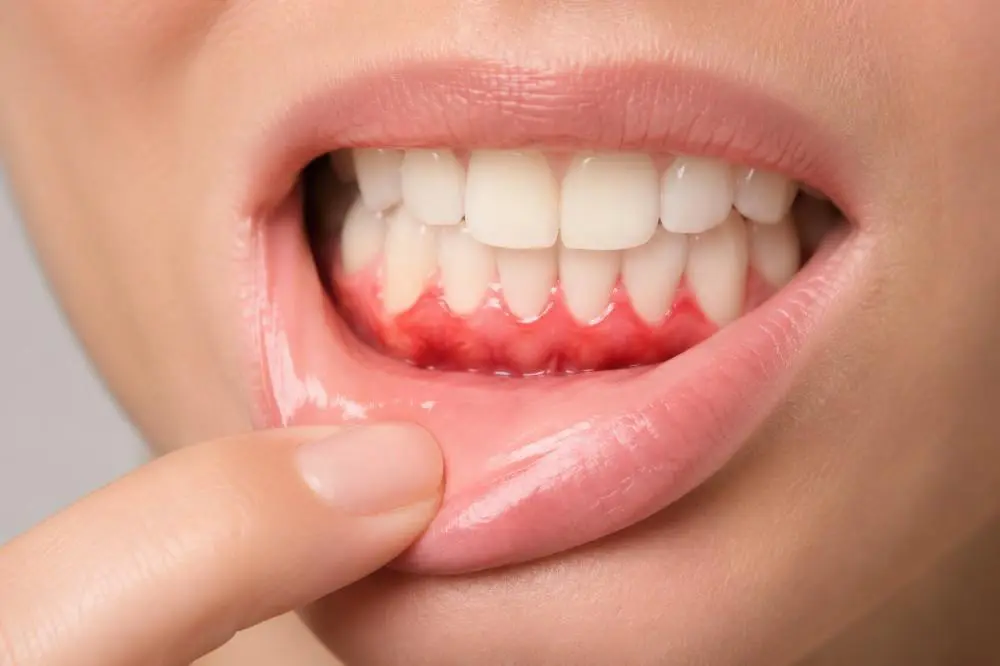
Gums that bleed when you brush, look puffy or are pulling back, or breath that won’t stay fresh: these are often the first signs of gum disease. It’s one of the most common reasons adults lose teeth. It’s also very treatable, especially when it’s caught early.
- Gum disease is an infection of the gums and the bone that holds your teeth. It’s caused by plaque and tartar.
- Gingivitis, the early stage, can usually be fully reversed.
- Periodontitis, the advanced stage, can be stopped and controlled, but lost bone doesn’t grow back on its own.
- Most people are treated with a deep cleaning (scaling and root planing) under freezing, followed by cleanings every 3-4 months.
- Surgery is only needed for deep pockets or areas that don’t heal with deep cleaning.
What is gum disease?
Gum disease (periodontal disease) is a bacterial infection of the tissues that support your teeth. Those tissues are the gums, the fibres that attach teeth to bone, and the jawbone itself. The Canadian Dental Association estimates that about 7 in 10 Canadians will develop gum disease at some point in their lives.
Gingivitis: the early, reversible stage
Plaque, a sticky film of bacteria, builds up along the gum line and irritates the gums. They become red and swollen and bleed easily. At this stage the bone isn’t damaged. The gums usually return to health within a few weeks of a professional cleaning and better daily care.
Periodontitis: the advanced stage
If gingivitis isn’t treated, plaque hardens into tartar (calculus) and spreads below the gum line. The gums pull away from the teeth and form pockets where bacteria collect. Your body’s response to the infection slowly breaks down the bone and fibres holding the teeth. Over time, teeth can loosen, shift and eventually fall out.
Periodontitis usually doesn’t hurt until it’s advanced. That’s why regular gum measurements at check-ups matter.
Warning signs of gum disease
- Gums that bleed when you brush or floss. Healthy gums don’t bleed.
- Red, swollen, puffy or tender gums
- Bad breath or a bad taste that doesn’t go away
- Gums pulling back, which makes teeth look longer
- New spaces between teeth, or teeth that feel loose or are shifting
- A change in how your teeth fit together when you bite
- Pus between the teeth and gums
- Sensitivity at the gum line
Smokers often show fewer signs, because smoking reduces gum bleeding even when disease is present.
Causes and risk factors
The direct cause is bacterial plaque and tartar left along and under the gum line. Some people are more likely to develop gum disease, or to have it get worse faster:
- Smoking and vaping. This is one of the strongest risk factors, and it also slows healing after treatment.
- Diabetes, especially when blood sugar isn’t well controlled
- Family history. Some people are genetically more prone to it.
- Hormonal changes during pregnancy, puberty and menopause
- Medications that cause dry mouth, and some that cause gum overgrowth (certain seizure, blood pressure and anti-rejection drugs)
- Stress and conditions that weaken the immune system
- Crowded teeth, or old fillings or crowns with rough edges, which are harder to keep clean
- Teeth grinding, which can speed up damage where support is already weak
Gum health and your overall health
Gum disease is a long-lasting source of inflammation in the body. Research has found links with several other conditions:
- Diabetes. This is the best-established link, and it works both ways. Diabetes raises the risk of gum disease, and untreated gum disease can make blood sugar harder to control. Treating gum disease has been shown to modestly improve blood sugar levels.
- Heart disease and stroke. People with gum disease have higher rates of heart disease. Studies haven’t shown that gum disease directly causes it.
- Pregnancy. Gum disease has been associated with preterm birth and low birth weight. Gum checks are safe and recommended during pregnancy.
Let us know about any medical conditions or medications. If you have diabetes or heart disease, we can share your gum health findings with your physician.
How we diagnose gum disease
A gum (periodontal) exam is quick and is part of every adult check-up. We:
- Measure your gum pockets. We gently slide a thin, blunt ruler (a probe) between each tooth and the gum and measure the pocket depth in millimetres, at six spots per tooth.
- Check for bleeding, recession and loose teeth.
- Take x-rays to see how much bone supports each tooth.
- Review your health history and risk factors.
| Pocket depth | What it usually means |
|---|---|
| 1–3 mm, no bleeding | Healthy gums |
| 1–3 mm with bleeding | Gingivitis, which is reversible |
| 4 mm | Early periodontitis, or swollen gums that may tighten after cleaning |
| 5–6 mm | Moderate periodontitis. A home toothbrush and floss can’t reach the bottom. |
| 7 mm or more | Advanced periodontitis, likely with significant bone loss |
Gum disease treatment options at a glance
| Treatment | Best for |
|---|---|
| Professional cleaning + home care coaching | Gingivitis |
| Scaling and root planing (deep cleaning) | Early to moderate periodontitis. The first step for almost everyone with pockets. |
| Local antimicrobials | A few pockets that stay deep after deep cleaning |
| Antibiotic pills | Aggressive or fast-progressing disease, or an acute infection |
| Pocket reduction (flap) surgery | Deep pockets that don’t respond to deep cleaning |
| Bone grafting / guided tissue regeneration | Certain bone defects around teeth |
| Gum grafting | Gum recession, exposed roots, thin gums |
| Periodontal maintenance | Everyone treated for periodontitis, for life |
Non-surgical gum disease treatments
Professional cleaning for gingivitis
Our hygienists remove plaque and tartar above and just below the gum line. Then they show you brushing techniques, and ways to clean between your teeth, that suit your mouth. Most people see the bleeding stop within two to three weeks.
Scaling and root planing (deep cleaning)
This is the main treatment for periodontitis, and for many people it’s the only active treatment they need. Unlike a regular cleaning, it reaches down into the pockets to the root surfaces.
- Freezing. We numb the section being treated with local anaesthetic, so you feel pressure and vibration but not pain.
- Scaling. An ultrasonic scaler and fine hand instruments remove tartar and bacteria from the tooth and root surfaces inside the pocket.
- Root planing. We smooth the root surfaces so bacteria have less to grip and the gums can tighten back against the tooth.
- Section by section. We usually treat one or two quarters of the mouth per visit, over 2-4 visits of about an hour each.
- Re-evaluation. About 4-8 weeks later, we measure your pockets again. Many pockets shrink by 1-2 mm or more. Any that stay deep are treated again or referred to a specialist.
Local antimicrobials
For a few stubborn pockets, we can place an antibiotic or antiseptic directly into the pocket after cleaning, where it releases slowly over several weeks. We may also prescribe a short course of a mouth rinse such as chlorhexidine. These work alongside a deep cleaning, never instead of one.
Antibiotic pills
Oral antibiotics aren’t used routinely. Most gum disease responds to cleaning alone, and overuse adds to antibiotic resistance. We may recommend them for fast-progressing disease, a gum abscess, or patients with certain medical conditions.
Fixing things that trap plaque
Part of treatment is removing whatever makes your gums hard to keep clean. That can mean smoothing or replacing old fillings and crowns with overhanging edges, or treating cavities near the gum line. If you grind your teeth, we can make a night guard to protect loose teeth. Very loose teeth can sometimes be splinted to their neighbours for support.
Surgical gum disease treatments
We only consider surgery when pockets stay deep after deep cleaning, or when there’s significant bone loss or recession. .
Pocket reduction (flap) surgery
This involves gently folding back the gum so the roots can be cleaned thoroughly under direct view. Uneven bone may be smoothed, and the gum is stitched back snugly around the tooth. The pocket is shallower afterwards, so it’s easier for you and your hygienist to keep clean.
Bone grafting and guided tissue regeneration
For certain bone defects around a tooth, graft material and a protective membrane can be placed during flap surgery to help bone and attachment regrow. Results depend on the shape of the defect, and these procedures work best in people who don’t smoke.
Gum (soft tissue) grafts
When gums have receded and exposed the roots, a thin piece of tissue is placed over the area. It usually comes from the roof of the mouth, or from a donor tissue product. Grafts can reduce sensitivity, protect roots from decay and further recession, and improve appearance.
Crown lengthening
The gum, and sometimes bone, is reshaped to expose more of a tooth. This is usually done so a broken tooth can be restored, or to correct a “gummy” smile.
When a tooth can’t be saved
If a tooth has lost too much support, removing it may protect the teeth and bone around it. Once the gums are healthy, we’ll talk through replacement options such as a dental implant, bridge or partial denture.
Periodontal maintenance: keeping it under control
Periodontitis is a long-term (chronic) condition. After active treatment, the bacteria in deep areas grow back within about three months. So most patients need maintenance cleanings every 3 or 4 months instead of every 6. Each visit includes pocket measurements, cleaning below the gum line where needed, and a check for any area that’s getting worse.
Keeping up with these visits is the biggest single factor in whether gum disease stays stable or comes back. If your gums stay healthy over time, we may be able to space visits further apart.
Recovery after a deep cleaning
- Most people go back to work the same day. The freezing wears off in a few hours. Wait until it does before eating, so you don’t bite your cheek.
- Your gums may be tender, slightly swollen and bleed a little for a day or two.
- Teeth may be sensitive to cold for a few weeks. A sensitivity toothpaste helps.
- As the swelling goes down, gums may look slightly lower and the spaces between teeth may look bigger. This is a normal sign of healing.
- Over the next few weeks you should notice less bleeding, firmer and pinker gums, fresher breath, and teeth that feel tighter.
For the first few days:
- Rinse with warm salt water 2–3 times a day
- Keep brushing gently with a soft brush, including the treated areas
- Choose softer foods if you’re tender
- If you need pain relief, take an over-the-counter product as directed on the label
Avoid:
- Smoking and vaping, which slow healing
- Very hot, spicy or crunchy foods for a day or two
- Skipping the re-evaluation appointment
Call us if:
- Bleeding is heavy or doesn’t slow with gentle pressure
- An area gets more swollen or painful after a few days instead of better
- You develop a fever, or a bump on the gum that drains pus
- Bleeding when you brush hasn’t improved after two weeks
Home care that makes treatment work
- Brush twice a day for two minutes with a soft or electric toothbrush, angling the bristles toward the gum line.
- Clean between your teeth every day. For larger spaces after treatment, small interdental brushes often work better than floss. A water flosser can help too.
- Use a fluoride toothpaste, plus a sensitivity toothpaste if roots are exposed.
- If you smoke or vape, quitting is one of the most effective things you can do for your gums. Ask us about support.
- If you have diabetes, keeping your blood sugar in range helps your gums heal and stay healthy.
Gum disease care at Scottsdale Dental Centre
Dr. Ahmad and our dental hygienists check your gums at every check-up. At our office on Scottsdale Drive, we provide cleanings, scaling and root planing, local antimicrobial treatment and periodontal maintenance. If you’re nervous about dental treatment, sedation options are available.
Are your gums bleeding?
Book a gum health exam. We’ll measure your gums and explain what we find in plain language. Then we’ll lay out your treatment options and costs before anything is done. Book your appointment online or call (519) 836-5110 today.
Frequently Asked Questions
Gingivitis, the early stage, can usually be fully reversed with a professional cleaning and better daily brushing and flossing. Periodontitis can be stopped and kept under control, but bone that has already been lost doesn’t grow back on its own. Some lost bone and gum can be rebuilt with grafting surgery.
We freeze the area first, so most people feel pressure and vibration rather than pain. Afterwards, the gums may be tender for a day or two, and teeth may be sensitive to cold for a few weeks.
Usually two to four visits of about an hour each, treating one or two sections of the mouth at a time. A re-check about 4 to 8 weeks later shows how well the gums have healed.
No. A regular cleaning removes plaque and tartar above and just under the gum line on healthy gums. A deep cleaning goes down into periodontal pockets to clean and smooth the root surfaces. It usually needs freezing and takes several visits.
The bacteria that cause gum disease build back up in deep pockets within about three months. More frequent maintenance visits clear them out before they can do more damage. This is the main way to keep periodontitis from coming back.
The bacteria involved can be passed through saliva. But whether someone develops gum disease depends mostly on their own oral hygiene, genetics and risk factors, so it isn’t considered contagious the way a cold is.
Yes. The strongest link is with diabetes, where each condition makes the other harder to control. Gum disease has also been associated with heart disease and with pregnancy complications, though research hasn’t shown it directly causes them.
Yes. Gum exams, cleanings and deep cleanings are safe during pregnancy, and the second trimester is often the most comfortable time. Pregnancy hormones make gums more likely to bleed, so it’s a good time for a check.