
TMJ Pain Treatment in Guelph
Symptoms, Causes, and What Your Dentist Can Do
Jaw pain is one of those symptoms that tends to creep up quietly. It might start as a click you barely notice when you yawn, or a mild ache at the end of a stressful day. Then gradually it becomes something more persistent. Morning headaches. Ear pain with no sign of infection. Difficulty chewing certain foods. A jaw that feels stiff or tired by mid-afternoon.
If any of this sounds familiar, you may be experiencing a temporomandibular disorder, commonly referred to as TMJ or TMD. It is one of the most common and most underdiagnosed sources of facial and head pain, and it is something that many Guelph patients live with for months or years before understanding what is causing it.
At Scottsdale Dental Centre in Guelph, Dr. Ahmad has been treating TMJ disorders since 2007. He goes beyond managing symptoms. He identifies and treats the underlying cause of your TMJ pain so you can eat, speak, and live comfortably again. He offers a full range of treatment options in-house, from custom occlusal guards and physiotherapy referrals to Botox for jaw pain, which is one of the most effective treatments available for patients with severe muscle-related TMJ symptoms. Nothing requires a referral to a specialist.
This page is designed to help you understand what TMJ actually is, how to recognize the symptoms, what causes it, and what options are available to you right here in Guelph.
What is TMJ? Understanding the terminology
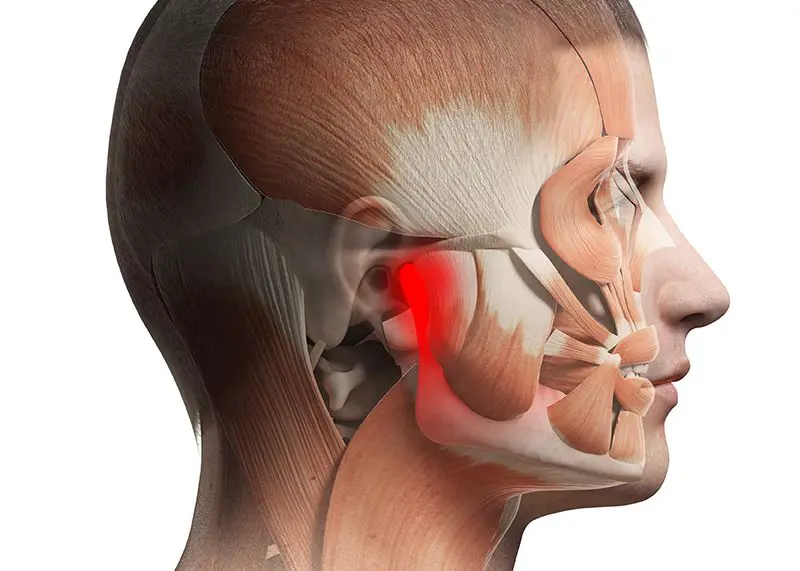
TMJ stands for temporomandibular joint, the pair of joints that connect your lower jaw to your skull. You have one on each side of your head, just in front of your ears. These joints are among the most complex and frequently used in the body, involved in every action that opens or closes your mouth including eating, speaking, swallowing, yawning, and laughing.
When people say they have “TMJ,” they typically mean they have a temporomandibular disorder, or TMD. TMD is the correct clinical term for conditions that cause pain or dysfunction in the jaw joint and the muscles that control jaw movement.
TMJ disorders affect roughly 1 in 10 adults, are significantly more common in women, and most frequently develop between the ages of 20 and 50. The pain and dysfunction they cause can radiate well beyond the jaw itself, which is why TMJ disorders are so often misdiagnosed as ear infections, sinus problems, or tension headaches.
The two terms are often used interchangeably in everyday conversation, including by many healthcare providers, so for the purposes of this post we will use TMJ and TMD interchangeably the way most patients do.
Are these symptoms familiar?
You may have a TMJ disorder if you experience any of the following. Jaw pain or soreness, especially in the morning. A clicking, popping, or grinding sensation when you open or close your mouth. Headaches or migraines that seem to start near your ears or temples. Ear pain, ringing, or a feeling of fullness that is not linked to an ear infection. Difficulty opening your mouth wide or a jaw that locks or feels stuck. Neck and shoulder tension that keeps coming back. Swelling on the side of your face. Toothaches without an obvious dental cause. Sleep disruption caused by jaw discomfort or grinding. Facial pain or tension that is hard to pinpoint.
If you are experiencing two or more of these symptoms, Scottsdale Dental Centre can help you find relief.
What causes TMJ disorder?
TMJ disorders rarely have a single identifiable cause. In most patients they develop as a result of several contributing factors that compound over time. They can stem from teeth grinding, jaw clenching, a displaced disc inside the joint, injury, arthritis, genetics, stress, or a combination of these factors.
The most clinically significant causes and contributing factors include the following.
Bruxism, which is teeth grinding and clenching. This is the most common contributing factor to TMJ disorder in the patients we see at Scottsdale Dental Centre. Bruxism places enormous repetitive load on the jaw joint and the surrounding muscles. Most grinding and clenching happens during sleep, meaning patients are often entirely unaware of it until a dentist identifies the signs during an examination, including distinctive wear patterns on the tooth surfaces. The force generated during grinding can be significant enough to crack teeth, wear enamel, and cause lasting joint damage over time.
Stress. Psychological and emotional stress is strongly associated with both bruxism and daytime jaw clenching. The muscles of the jaw are among the first places in the body to hold tension during stress. Patients often notice that their TMJ symptoms worsen during particularly difficult periods at work or in their personal lives, even when they are not consciously aware of clenching.
Structural issues with the joint itself. The disc that cushions the temporomandibular joint can become displaced or deteriorated over time. When the disc is not positioned correctly, the bones of the joint make contact with each other or with displaced tissue, producing clicking, pain, and over time, degenerative changes.
Arthritis. Both osteoarthritis and rheumatoid arthritis can affect the temporomandibular joint, causing pain, inflammation, and progressive changes to the joint surfaces. TMJ arthritis is more common in older patients but can occur at any age, particularly in patients with systemic inflammatory conditions.
Trauma and injury. A direct blow to the jaw, a whiplash injury from a motor vehicle accident, or a prolonged dental appointment that required extended mouth opening can all trigger or worsen TMJ symptoms. In some patients, TMJ disorder begins following a specific injury and persists long after the initial trauma has healed.
Dental factors. Missing teeth, poorly fitting dental restorations, or significant malocclusion can all place uneven load on the jaw joint over time and contribute to TMJ symptoms.
Hypermobility. Some patients have naturally lax ligaments throughout the body, including in the jaw joints. This hypermobility means the jaw can move beyond its ideal range, placing stress on surrounding structures.
It is worth emphasizing that TMJ disorders are genuinely complex. In most patients the problem is not one thing but a combination of factors, and effective management addresses the contributing factors rather than just the symptoms.
How TMJ disorder is diagnosed at Scottsdale Dental Centre
TMJ disorders are diagnosed through a combination of clinical history, physical examination, and in some cases imaging.
Dr. Ahmad conducts a thorough evaluation that includes a complete review of your medical and dental history, a detailed clinical examination of your jaw joint, bite, and muscles, a discussion of your symptoms and how they affect your daily life, bite assessment, jaw mobility testing, bruxism analysis, and diagnostic imaging where needed to identify the true source of your pain. By the end of this assessment you will have a clear understanding of what is causing your TMJ pain.
In cases where joint structural problems or significant bone changes are suspected, cone beam CT scanning is available at our practice. This produces a three-dimensional image of the joint anatomy and allows assessment of the bony structures of the joint in a way that two-dimensional x-rays cannot provide.
The most important thing to know: TMJ disorders are treatable. Most patients at Scottsdale Dental Centre see significant, lasting improvement without surgery, injections, or irreversible procedures. Dr. Ahmad’s philosophy is to always start with the most conservative and reversible options first. He never recommends an irreversible treatment until every appropriate conservative option has been explored. Research supports this approach. A 2020 network meta-analysis published in the International Journal of Oral and Maxillofacial Surgery found that multimodal therapy combining splint therapy with patient counseling, education, and behavioral strategies produced the greatest improvement in TMJ symptoms compared to any single treatment on its own. This is why Dr. Ahmad never relies on a night guard or splint alone, and why every treatment plan at Scottsdale Dental Centre is built around a combination of therapies tailored to your specific situation.
Treatment options for TMJ disorder in Guelph
The good news is that the majority of TMJ disorders respond well to conservative, non-surgical treatment. Surgery is rarely required and is always a last resort after conservative measures have been thoroughly tried.
At Scottsdale Dental Centre, we offer the following treatment approaches.
Custom Nigthgurads A custom-fitted occlusal guard is often the first line of treatment for TMJ disorder related to bruxism. Worn during sleep, it cushions the joint, reduces muscle strain overnight, and protects your teeth from wear. Unlike over-the-counter options, the custom night guards at Scottsdale Dental Centre are shaped precisely to your bite using digital impressions for maximum comfort and long-term effectiveness.
Custom Orthotics or Occlusal Splint therapy. For patients with joint-related TMJ disorders, Dr. Ahmad may recommend an occlusal splint, a specially designed appliance that gently repositions the jaw to reduce pressure on the disc and surrounding structures. This is used as part of a broader TMJ treatment plan and is monitored and adjusted over time to ensure it is working as intended.
Therapeutic Botox for jaw pain. Botox is an increasingly effective and well-researched treatment for TMJ disorders driven by overactive or hypertonic jaw muscles. When injected into the masseter and temporalis muscles, the large muscles responsible for chewing and clenching, Botox temporarily reduces their activity, relieving the muscle tension that is often the primary driver of TMJ pain, headaches, and jaw soreness.
What makes Botox particularly effective for dental conditions is a dual mechanism. It reduces overactive muscle function and it also has direct pain-relieving properties, acting on sensory nerve endings near the injection site and reducing discomfort at the source rather than simply masking it. Studies show meaningful pain reduction lasting up to six months after treatment, making Botox a strong option when splints or other approaches have not fully worked.
Treatment takes only ten to fifteen minutes in the dental office, requires no downtime, and results typically last three to six months. Many patients notice meaningful improvement within one to two weeks of their first treatment, with effects peaking around weeks five to eight. Botox is used at Scottsdale Dental Centre as part of a comprehensive TMJ treatment plan, not as a standalone fix.
Patient education and self-care guidance. Understanding your condition is a core part of getting better. Dr. Ahmad takes the time to walk every patient through exactly what is happening in their jaw, what is making their TMJ pain worse, and what they can do at home to support recovery. Dietary adjustments, jaw awareness habits, stress management strategies, and sleep improvements all play a real role in how quickly and completely patients improve.
Physiotherapy referral and co-management. For patients with significant muscle involvement, jaw stiffness, or limited range of motion, Scottsdale Dental Centre coordinates with physical therapists in the Guelph area who specialize in jaw, head, and neck conditions. A collaborative approach consistently produces better outcomes than dental treatment alone for these patients.
Medication support. Where appropriate, Dr. Ahmad will incorporate short-term anti-inflammatory or muscle relaxant medication during acute TMJ flare-ups. Medication is never used as a standalone solution, and we actively help patients avoid long-term reliance on painkillers.
When conservative care is not enough. If your jaw pain is tied to neck tension, posture, or muscle strain elsewhere in the body, we work alongside physiotherapists, chiropractors, and massage therapists in the Guelph area to address the whole picture, not just the joint. For the small number of cases where imaging reveals structural joint damage that conservative care cannot resolve, we coordinate directly with trusted oral and maxillofacial surgeons for further evaluation and if needed surgical treatment. You will never be left wondering what happens next. We walk you through every option and make sure you are never starting over with someone new.
Therapeutic Botox for TMJ in Guelph: a closer look
Because Botox for jaw pain is one of the most misunderstood treatments available for TMJ disorder, it deserves a closer look. Many patients associate Botox exclusively with cosmetic procedures. Its use for jaw pain and headaches is genuinely therapeutic and is well supported by clinical evidence.
Dentists are uniquely qualified to administer therapeutic Botox for jaw-related conditions. They spend their careers studying the relationship between jaw joints, bite alignment, and facial muscles, which means they can not only deliver the injections precisely, but also diagnose what is actually driving your symptoms in the first place. A dentist administering Botox for TMJ is not just treating the pain. They are treating the cause.
Here is exactly what the treatment process looks like at Scottsdale Dental Centre.
Step 1 — Consultation and assessment. Dr. Ahmad conducts a thorough evaluation including bite assessment, jaw mobility testing, and bruxism analysis to confirm Botox is the right fit for your situation.
Step 2 — Targeted injections. Small, precise injections are placed into the affected muscles, typically the masseter, temporalis, and surrounding areas. The appointment takes ten to fifteen minutes. Most patients describe it as a minor pinch. No dental freezing is required.
Step 3 — Gradual improvement. You may notice mild tenderness for the first 24 hours. Results build over the following weeks, peaking around weeks five to eight.
Step 4 — Maintained relief. Effects last three to six months. Repeat treatments maintain the benefit long-term. All changes to muscle tissue are fully reversible.
Results timeline. Days one to two: mild tenderness at injection sites is normal and fades quickly. Weeks one to four: gradual reduction in muscle tension and discomfort. Weeks five to eight: effects peak and most patients notice the greatest improvement during this window. Months three to six: effects gradually wear off and most patients return for a repeat treatment. Long term: all changes to muscle tissue are fully reversible and no permanent effects are observed in clinical studies.
Who is a good candidate for Botox for TMJ? Patients whose pain is primarily muscle-related, patients who clench heavily and have not found sufficient relief from a night guard alone, patients experiencing chronic jaw tension or tension-type headaches linked to TMJ, and patients for whom faster relief is needed alongside other conservative treatments.
Who should not receive Botox. Women who are pregnant or breastfeeding, and individuals with certain neuromuscular disorders. Dr. Ahmad will review your complete health history before recommending Botox as part of your TMJ management plan. If your TMJ issues are caused by internal joint problems or arthritis rather than muscle overactivity, a different treatment approach may be more appropriate. We will always be upfront with you about this.
What about the appearance of my jaw? At the doses used for dental treatment, visible cosmetic changes are minimal. Some patients notice a slight slimming of the jaw over time as the masseter muscles reduce in size with repeated treatment, which many consider a secondary benefit.
Following treatment. Your dentist will guide you through jaw relaxation exercises to support your recovery and extend your results. Depending on your situation, we may also recommend pairing Botox with a custom night guard, bite adjustments, or stress reduction strategies for the best long-term outcome.
Insurance and cost. Therapeutic Botox for conditions like TMD and bruxism is not typically covered by standard dental insurance plans in Ontario, though some plans may offer partial coverage when treatment is for medical rather than cosmetic purposes. We recommend calling your provider to ask specifically about coverage for therapeutic Botox. Our team is happy to provide the documentation needed to support any claim you choose to submit. We will walk you through costs clearly before any treatment begins.
Your TMJ treatment journey at Scottsdale Dental Centre
We know that starting treatment for a new condition can feel uncertain. Here is exactly what to expect.
Your first appointment with Dr. Ahmad includes a full review of your medical and dental history, a thorough clinical examination of your jaw joint, bite, and surrounding muscles, a detailed conversation about your symptoms and how they are affecting your quality of life, and diagnostic imaging where appropriate. By the end of this appointment you will have a clear understanding of what is causing your TMJ pain.
Dr. Ahmad will then present a treatment plan tailored specifically to your condition, your goals, and your lifestyle. All options will be explained clearly, along with associated costs, before anything begins. There is no pressure and no rushed decisions.
Once treatment begins, Scottsdale Dental Centre provides regular monitoring and adjustments to make sure your plan is working. We are with you throughout the process, and your plan can be modified at any point based on how you respond.
When to see a dentist about jaw pain
Many people with TMJ symptoms wait much longer than they should before seeking an assessment, often because they assume jaw pain is something they simply have to live with, or because they do not realize their dentist can help.
You should book an assessment if you have jaw pain or tenderness that persists beyond a few days, if you notice clicking or popping in your jaw, if you have morning headaches that seem to coincide with jaw tightness, if you have been told you grind your teeth, if you experience ear pain without signs of infection, if your jaw ever locks or feels stuck, or if you have noticed changes in the way your teeth come together.
Early assessment and treatment produces better outcomes than waiting. TMJ pain can go away on its own in mild cases, but for many patients untreated TMJ disorders become chronic and progressively harder to manage. Early care with Dr. Ahmad tends to produce faster, more complete, and longer-lasting relief than waiting.
What to do at home if you think you have TMJ disorder
While you are waiting for your appointment, the following measures can help manage your symptoms.
Take an over the counter anti-inflammatory such as ibuprofen at the recommended dose, unless you have a medical reason to avoid it. This reduces both pain and the underlying inflammation in the joint.
Apply a warm compress to the jaw joint area for fifteen to twenty minutes several times a day. Warmth helps relax the muscles surrounding the joint and improves circulation to the area.
Avoid hard, crunchy, or chewy foods. Choose softer options during periods of active symptoms. Cut food into small pieces. Avoid chewing gum.
Be aware of daytime clenching. Many people are entirely unaware that they clench their teeth during the day, particularly during concentration or stress. Practicing keeping your teeth slightly apart with your lips closed, which is the natural resting position of the jaw, can reduce the load on the joint during waking hours.
Avoid extreme jaw movements such as very wide yawning or biting into large, hard foods.
Avoid resting your chin in your hand, which places direct pressure on the jaw joint. Avoid sleeping on your stomach with your face pressed into a pillow, which twists the neck and can worsen jaw tension overnight.
Frequently asked questions about TMJ in Guelph
What causes TMJ disorders? TMJ disorders can result from teeth grinding, jaw clenching, a previous jaw injury, arthritis, genetics, stress, poor sleep, or a misalignment of the jaw. Often it is a combination of factors rather than a single cause. Part of what Dr. Ahmad does in your initial assessment is identify the specific factors driving your TMJ pain so treatment can be targeted accordingly.
Will I need surgery? Almost certainly not. The vast majority of TMJ disorders respond well to conservative, non-surgical care. Surgery is rarely necessary and is only considered in cases where all appropriate conservative treatments have been tried without adequate relief.
Can TMJ disorders be cured? Many patients experience significant, lasting relief with proper treatment. Our goal at Scottsdale Dental Centre is to address the root cause of your TMJ disorder and provide you with the tools, therapies, and habits to manage your jaw health long-term. Most patients find that consistent treatment leads to a major reduction in pain and a return to normal function.
Is a custom orthotic or splint enough to treat TMJ? For some patients, yes. For others it is one important component of a broader treatment plan. Dr. Ahmad will give you an honest assessment of what to expect from each element of your care in your specific situation. Research supports combining splint therapy with patient education and behavioral strategies over any single treatment approach.
Does Botox for TMJ hurt? Most patients describe it as a minor pinch. The needles used are very fine and the treatment is over quickly. No dental freezing is needed.
Will Botox change the way my face looks? At the doses used for dental treatment, visible cosmetic changes are minimal. Some patients notice a slight slimming of the jaw over time, which many consider a secondary benefit.
Is Botox for TMJ safe? Yes. Therapeutic Botox for jaw muscle pain has a strong safety record and is used widely in dental and medical settings for TMJ disorders. Clinical trials consistently show that side effects are mild and temporary. All muscle changes are fully reversible over time.
Will my insurance cover TMJ treatment? Coverage varies by plan. Some extended health and medical insurance policies cover TMJ treatment even when dental insurance does not. The team at Scottsdale Dental Centre will help you understand your benefits before treatment begins. Therapeutic Botox is not typically covered by standard dental plans in Ontario but some plans may offer partial coverage for medical use. We will provide documentation to support any claim you choose to submit.
Do I need a referral to see Dr. Ahmad for TMJ? No. You can contact Scottsdale Dental Centre directly to book a TMJ evaluation. If you have been seen elsewhere and have existing imaging or records, please bring them as they are genuinely helpful.
How long does TMJ treatment take? It depends on the type and severity of your TMJ disorder. Many patients notice meaningful improvement within the first few weeks of care. More complex or long-standing cases may take several months. Dr. Ahmad will give you a realistic timeline at your initial assessment.
What should I do for immediate TMJ pain relief? Apply a warm compress to the jaw, eat soft foods, avoid wide jaw movements, and take over the counter anti-inflammatory medication like ibuprofen if appropriate for you. If you are in significant pain, contact Scottsdale Dental Centre directly as we offer same-day appointments for patients experiencing acute TMJ pain.
TMJ treatment at Scottsdale Dental Centre in Guelph
TMJ pain, jaw clicking, chronic headaches, and disrupted sleep are not things you have to accept as normal. If you have been putting off getting answers, now is the right time to come in. A TMJ evaluation at Scottsdale Dental Centre is thorough, non-invasive, and often covered at least in part by insurance.
At Scottsdale Dental Centre, Dr. Ahmad offers a comprehensive range of TMJ treatment options in-house, including custom occlusal guards, occlusal splint therapy, Botox for jaw pain and headaches, physiotherapy coordination, medication support, and occlusal assessment. Cone beam CT scanning is available for cases requiring three-dimensional joint imaging. Nothing requires a referral elsewhere.
We have been caring for Guelph families from 630 Scottsdale Drive since 1987. Dr. Ahmad’s hospital-based residency training alongside Oral and Maxillofacial Surgery and Emergency Medicine specialists means TMJ cases are approached with a depth of clinical judgment that goes beyond standard general dental training.
We are currently welcoming new patients of all ages. We offer direct billing to most major insurance providers and accept the Canadian Dental Care Plan. Same-day appointments are available for patients in acute pain.
Call us today at (519) 836-5110 or request an appointment online.