
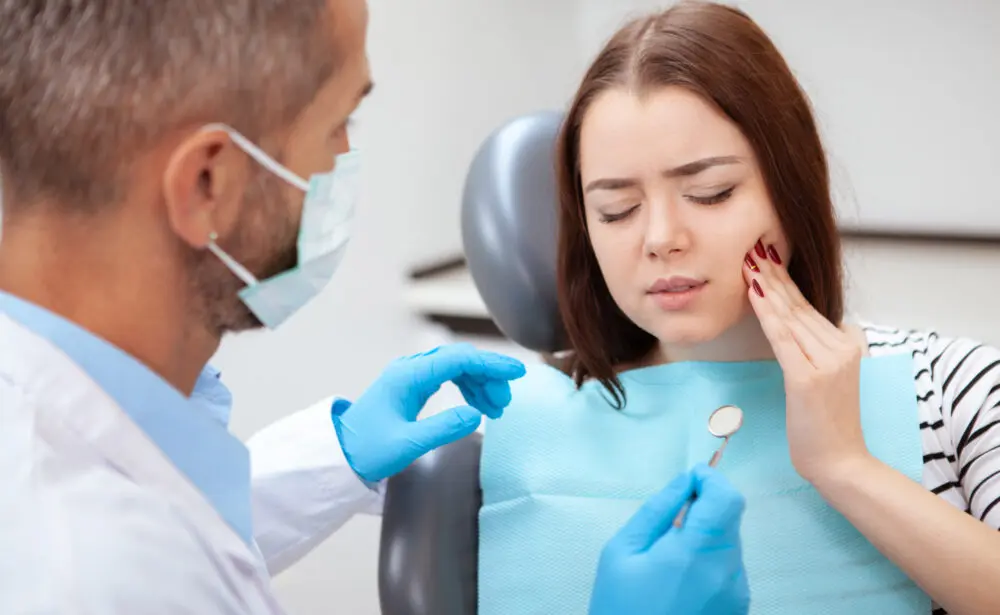
Dental Emergency in Guelph
What to Do, Who to Call, and When to Go to the ER
A dental emergency is one of those situations where knowing what to do in the first few minutes can make a significant difference to the outcome. Whether it is a knocked-out tooth, a broken crown, a severe toothache that appeared overnight, or a swelling that was not there this morning, the steps you take before you reach a dental professional matter.
At Scottsdale Dental Centre in Guelph, we reserve same-day emergency appointment blocks every single day for patients who need urgent care. Dr. Ahmad is hospital-trained, has treated a wide range of dental injuries and urgent conditions, and unlike many emergency dental services that assess and refer, we perform extractions, root canals, and repairs right here at 630 Scottsdale Drive. You are not paying to be sent somewhere else.
This post is designed to help you understand exactly what counts as a dental emergency, what to do in the first moments of each situation, when you should call us versus go straight to Guelph General Hospital, and what to expect when you arrive.
What is a dental emergency?
A dental emergency is any situation involving your teeth, gums, jaw, or surrounding tissue that requires prompt professional attention to relieve significant pain, prevent permanent damage, treat infection, or address trauma.
Not every dental problem is an emergency. A small chip that is not causing pain, mild sensitivity to cold, or a loose filling that is not uncomfortable can generally wait for a regular appointment. But many situations cannot wait, and attempting to manage them at home beyond basic first aid often makes the outcome worse and the treatment more complex.
The clearest signs that you are dealing with a dental emergency include severe or worsening pain that does not respond to over the counter pain medication, visible swelling in your face, jaw, or neck, bleeding that will not stop, a tooth that has been knocked out or dislodged, a broken tooth with a sharp edge or exposed nerve, signs of abscess or infection including fever and swelling, difficulty swallowing or breathing, and any trauma to the mouth or jaw from an accident or impact.
If you are experiencing any of these, call us immediately at (519) 836-5110. We will triage your situation over the phone and get you seen as quickly as possible.
Should you call your dentist or go to the ER?
This is the question most people ask when a dental emergency happens, particularly after hours or on a weekend, and the honest answer is that it depends entirely on what is happening.
Here is a clear breakdown.
Call your dentist first in almost every dental emergency. A dental emergency is almost always better treated by a dentist than by a hospital emergency room, because ER physicians are trained in medicine, not dentistry. The ER is not likely to be able to treat a dental problem unless it is a health emergency. They may use temporary measures to relieve pain until you are able to see a dentist. In practical terms, this means the ER can give you pain medication and antibiotics, but they cannot remove a tooth, perform a root canal, or repair a broken restoration. You will still need to see a dentist.
Go directly to Guelph General Hospital Emergency Department in the following situations.
You have significant facial swelling that is spreading toward your eye, neck, or throat.
You are having difficulty swallowing or breathing.
You have a high fever alongside dental pain or swelling.
You have experienced a significant facial injury, jaw fracture, or trauma to the head.
You are bleeding heavily from the mouth and cannot control it.
You have signs of a spreading infection such as feeling systemically unwell, confusion, or extreme fatigue alongside dental symptoms.
These situations represent genuine medical emergencies where the infection or injury has moved beyond a purely dental problem and carries risk to your overall health and in some cases your airway. The ER at Guelph General Hospital is the right first stop in these circumstances, not a dental office.
For everything else, call your dentist first.
What to do in each type of dental emergency
Knocked-out tooth
A knocked-out tooth is one of the most time-sensitive dental emergencies. The window for successful reimplantation is narrow, ideally within thirty minutes of the tooth being knocked out, and very difficult to achieve after ninety minutes.
Pick the tooth up by the crown, which is the white visible part, and never by the root. Do not scrub it or remove any tissue attached to the root. If it is dirty, rinse it very gently with milk or clean water for no more than ten seconds. Do not dry it.
If possible, try to reinsert the tooth into the socket immediately. Hold it in place by gently biting down on a clean piece of gauze or cloth. If reinsertion is not possible, store the tooth in milk or saline to keep it moist and get to a dentist immediately. Do not store it in water, which damages the root cells.
Call us at (519) 836-5110 immediately.
Broken or chipped tooth
Whether a broken tooth requires same-day care depends on the extent of the break and the symptoms you are experiencing.
If the break is minor and there is no pain, no sharp edge causing soft tissue injury, and no visible pink or red tissue at the centre of the tooth, it can generally wait for the next available appointment. You can cover sharp edges with dental wax or sugar-free gum to protect your cheek or tongue until you are seen.
If the break is significant, if you can see exposed inner tooth structure, if there is significant pain, sensitivity to air or temperature, or bleeding, call us the same day. A broken tooth that exposes the nerve or pulp requires prompt treatment to prevent infection and avoid more complex treatment down the line.
Rinse with warm water and apply a cold compress to reduce swelling while you wait for your appointment.
Severe toothache
A toothache that has come on suddenly and is severe, persistent, throbbing, or waking you up at night is not something to wait on. Significant tooth pain of this kind almost always indicates either an advanced cavity that has reached the nerve, an abscess, or a crack in the tooth. All of these require professional treatment. Pain medication manages the symptom but does not address the cause, and leaving the underlying problem untreated allows it to worsen.
Take an over the counter pain reliever appropriate for you and call us first thing in the morning or as soon as we open. Do not place aspirin directly on the gum tissue, as this can cause a chemical burn to the soft tissue. A warm salt water rinse can provide temporary comfort while you wait.
If the toothache is accompanied by facial swelling, fever, or difficulty swallowing, this suggests a spreading infection and you should seek care more urgently. Call us immediately during business hours or go to the Guelph General ER after hours.
Dental abscess
A dental abscess is a pocket of infection that forms in or around the root of a tooth or in the gum tissue. It is one of the more serious dental emergencies because dental infections can spread beyond the mouth and in severe cases can become life-threatening if they reach the airway or spread systemically.
Signs of a dental abscess include a persistent, severe toothache, swelling in the face or jaw, a pimple-like bump on the gum, sensitivity to hot and cold, fever, and a foul taste in the mouth that may indicate the abscess has drained.
If the abscess ruptures, the pain may decrease significantly but you still need dental treatment. If the abscess does not drain, the infection may spread to your jaw and to other areas of your head and neck. A reduction in pain when an abscess drains is not a sign that the problem has resolved. It still requires prompt professional attention and typically a course of antibiotics alongside definitive dental treatment.
Call us immediately. If the swelling is progressing rapidly, spreading toward your neck or eye, or you are having any difficulty swallowing or breathing, go directly to Guelph General Hospital.
Lost filling or crown
A lost filling or crown is uncomfortable but is rarely an urgent emergency. The exposed tooth can be sensitive to temperature, air, and pressure, and the sharp edges of a broken restoration can irritate the tongue and cheek.
Use dental wax or sugar-free gum to cover sharp edges temporarily until you can be seen. Avoid chewing on that side of your mouth and avoid very hot, cold, or sticky foods. Call us to book the next available appointment.
If the tooth is painful without stimulation, if there is swelling, or if you can see that the tooth itself has fractured underneath the lost restoration, call us the same day as these suggest a more urgent situation.
Soft tissue injuries
Cuts and lacerations inside the mouth bleed significantly even when they are relatively minor, because oral tissue has a rich blood supply. This can look alarming when it is not always as serious as it appears.
Apply gentle pressure to the area with clean gauze or a cloth. A wet tea bag can also help, as the tannins in tea assist with clotting. If the bleeding does not slow after fifteen to twenty minutes of sustained pressure, or if the laceration is deep, go to the Guelph General ER or an urgent care clinic. Deep lacerations may require suturing.
If the injury is to the gum tissue only, is minor, and bleeding is controlled, call us to have it assessed at your earliest convenience.
Broken jaw or significant facial trauma
Go directly to Guelph General Hospital Emergency Department. Do not stop to call a dentist. A fractured or dislocated jaw requires emergency medical assessment, imaging, and in many cases specialist intervention. Apply a cold compress to reduce swelling on the way if possible and support the jaw gently if it feels unstable.
What to expect when you call Scottsdale Dental Centre for an emergency
When you call us with a dental emergency at (519) 836-5110, here is what happens.
Our team will ask you a few brief questions about what you are experiencing to triage the situation. This takes two to three minutes and helps us understand how urgently you need to be seen, what we may need to prepare before you arrive, and whether there is any first aid advice specific to your situation that we should walk you through immediately.
In most cases we will give you a same-day appointment. We hold emergency blocks every day specifically for situations like yours. If you call early in the day you will almost always be seen that day. If you call later in the day we will do everything possible to fit you in or give you clear guidance on what to do overnight.
When you arrive, your comfort is the first priority. If you are in significant pain, we address that before anything else. Dr. Ahmad will then assess the situation, explain what he finds, and discuss your options before any treatment begins. We do not proceed without your understanding and agreement.
Unlike many emergency dental services, we perform the treatment here. Extractions, root canals, broken tooth repairs, abscess drainage, all of this is done at our practice on Scottsdale Drive. You will not be assessed and referred elsewhere.
If your emergency happens after hours, our voicemail provides clear next steps for urgent care. We work as part of Guelph Hospital’s on-call Emergency Dentist network, so after-hours guidance connects you to the appropriate level of care.
How to manage dental pain while you wait
While you are waiting to be seen, these steps can help manage discomfort and prevent the situation from worsening.
Take an over the counter pain reliever appropriate for you, such as ibuprofen or acetaminophen, at the recommended dose. Ibuprofen has both pain-relieving and anti-inflammatory properties which makes it particularly helpful for dental pain involving swelling or infection. Do not place aspirin directly on gum tissue.
Rinse your mouth gently with warm salt water. This helps reduce bacteria in the mouth and can provide temporary comfort for soft tissue irritation and mild infection. Use approximately half a teaspoon of salt in a cup of warm water.
Apply a cold compress to the outside of your cheek in twenty-minute intervals to reduce swelling and numb discomfort. Do not apply heat to a swelling, as this can encourage the spread of infection.
Avoid very hot, cold, sweet, or hard foods and chew on the opposite side of your mouth from the affected area.
If a tooth has been knocked out, keep it moist in milk or saliva. If a restoration has been lost, cover the exposed tooth with dental wax or sugar-free gum.
Do not use clove oil directly on open tissue or an exposed nerve unless directed by a dental professional, as it can cause tissue burns in certain applications.
Preventing dental emergencies
While some dental emergencies are unavoidable, particularly those resulting from accidents or sports injuries, a significant number are the result of underlying dental problems that were caught too late or not treated when treatment was simpler.
Regular dental examinations every six months allow problems to be identified and addressed before they become emergencies. A small cavity treated early is a thirty-minute filling appointment. The same cavity left until it reaches the nerve is a root canal. A loose crown noticed at a checkup is a simple recement. A crown that falls off months later and fractures the tooth underneath is a significantly more complex situation.
At Scottsdale Dental Centre we perform oral cancer screenings at every examination, assess for signs of gum disease and bone loss that patients cannot feel, and identify problems in their earliest stages. Preventive care is genuinely the most effective form of emergency prevention available.
If it has been more than six months since your last dental examination, or if you have been putting off a dental concern, call us. Same-day emergency appointments are always available and we are always welcoming new patients.
Emergency dental care at Scottsdale Dental Centre in Guelph
Dental emergencies do not follow business hours and neither does our commitment to caring for our patients. We reserve same-day emergency appointments every day. We triage calls promptly and get you the guidance you need immediately. And we perform treatment here rather than sending you elsewhere.
Dr. Ahmad is hospital-trained with experience across a wide range of urgent dental situations. His residency training alongside Oral and Maxillofacial Surgery, Anaesthesia, and Emergency Medicine specialists means he approaches dental emergencies with a level of clinical confidence and capability that most general dental practices cannot match.
If you are experiencing a dental emergency in Guelph right now, call us at (519) 836-5110.
We are located at 630 Scottsdale Drive, Guelph, ON, minutes from Stone Road Mall. Free parking directly in front.
If your emergency involves spreading facial swelling, difficulty swallowing or breathing, significant trauma, or fever alongside dental symptoms, go directly to Guelph General Hospital Emergency Department at 115 Delhi Street, Guelph.