
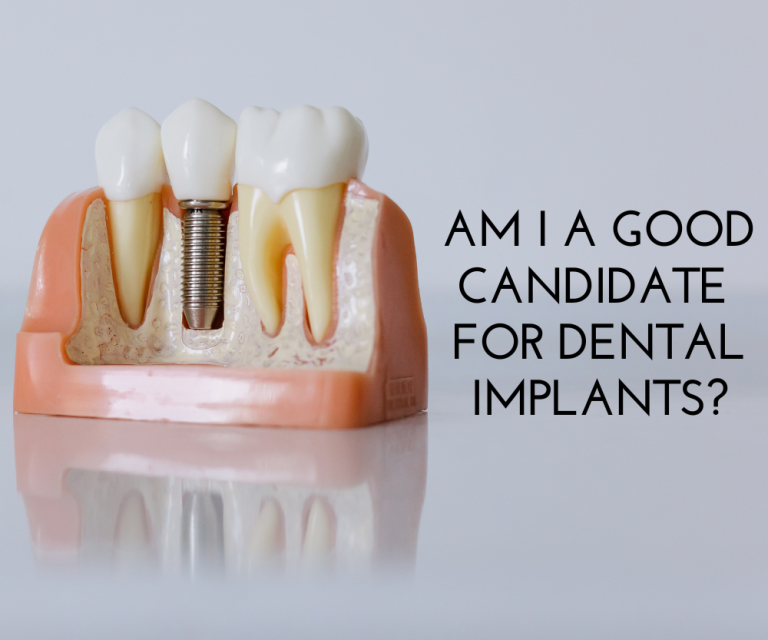
Am I a Candidate for Dental Implants?
A Plain-Language Guide From a Guelph Dentist
One of the most common questions we hear at Scottsdale Dental Centre is some version of this: “I’ve been told I might need an implant, but I’m not sure if I qualify.” Or sometimes: “I went somewhere else and they said I couldn’t have implants. Is that definitely true?”
The honest answer is that the vast majority of adults who are missing one or more teeth are candidates for dental implants, often including people who have been told they are not. Whether you qualify depends on a specific set of clinical factors, and the only way to know for certain is a thorough assessment by a dentist with the training and technology to evaluate them properly.
This post is designed to give you a plain-language understanding of what those factors are, what can and cannot be addressed to make you a better candidate, and what the assessment process looks like at our practice.
Dr. Ahmad completed a hospital-based General Practice Residency at Hartford Hospital alongside Oral and Maxillofacial Surgery and Anaesthesia departments, and has been placing and restoring implants since 2007, including complex cases involving sinus lifts, bone grafting, and immediate placement. Everything is done here.
What is a dental implant and why does candidacy matter?
A dental implant is a small titanium post that is placed into the jawbone to act as an artificial tooth root. Once it integrates with the bone, a crown, bridge, or other restoration is attached on top, creating a replacement tooth that looks, feels, and functions like a natural tooth.
Because an implant is anchored directly into the jawbone, the bone and surrounding tissue need to be in a condition that allows the implant to integrate successfully and remain stable over the long term. That is why candidacy matters, not as an arbitrary gatekeeping exercise, but because placing an implant in unfavorable conditions increases the risk of failure, and assessing those conditions properly protects both the outcome and your investment.
The good news is that many of the factors that affect candidacy can be addressed before or alongside implant placement, meaning that a “no” from an initial assessment is often a “not yet” rather than a permanent answer.
The factors that determine implant candidacy
Sufficient bone volume and density
This is the most important clinical factor. The implant post needs enough bone to be placed into and enough bone quality to support osseointegration, which is the process by which the titanium post fuses with the surrounding bone tissue over several months.
Patients who have been missing teeth for a significant period of time often have reduced bone volume in that area, because the bone that previously supported the tooth root gradually resorbs once the root is no longer there. This is one of the most compelling reasons to address missing teeth sooner rather than later.
If bone volume is insufficient, bone grafting can rebuild the area before or at the time of implant placement. Dr. Ahmad performs bone grafting procedures in-house, including complex cases involving sinus lifts for the upper jaw where the sinus cavity sits close to the implant site. These procedures add time to the overall treatment timeline but make implants possible for patients who would otherwise be told they are not candidates.
At Scottsdale Dental Centre we use cone beam CT scanning to produce precise three-dimensional images of your jaw anatomy before any implant planning takes place. This allows Dr. Ahmad to assess bone volume and density with a level of accuracy that two-dimensional x-rays simply cannot provide, and to plan implant placement with precision that reduces risk and improves outcomes.
Healthy gum tissue
Active gum disease is a contraindication for dental implants. The bacteria responsible for periodontal disease can affect the tissue and bone around an implant just as they affect the tissue and bone around natural teeth, and placing an implant in the presence of untreated gum disease significantly increases the risk of peri-implantitis, which is an infection around the implant that can lead to implant failure.
This does not mean that patients with a history of gum disease cannot have implants. It means that gum disease must be diagnosed and treated first, and that patients with a history of periodontal disease require more careful monitoring during and after the implant process.
Good candidates generally possess healthy gum tissue and are completely free from active periodontal disease. If you have signs of gum disease when you come in for your assessment, we will discuss treatment first and implant placement once the gum health is established.
Overall oral health
Untreated decay, infection, or other active dental problems in the mouth need to be addressed before implant placement. This is not because they directly prevent integration, but because introducing an implant into a mouth with active infection increases the biological burden on your immune system and can compromise healing.
A comprehensive dental examination, which is part of every implant consultation at Scottsdale Dental Centre, will identify any issues that need to be resolved before proceeding. In many cases these can be addressed alongside early stages of the implant process.
General health and medical history
Dental implants involve a surgical procedure and a healing period, so your overall health matters. Most systemic health conditions do not disqualify you from implants, but some require careful management and in some cases additional precautions or modifications to the treatment approach.
Conditions and factors that require particular attention in implant planning include diabetes, osteoporosis and medications used to treat it, autoimmune conditions, blood thinners and anticoagulant medications, a history of radiation therapy to the head or neck, and heavy smoking.
None of these are automatic disqualifiers in most cases, but they are factors that need to be discussed honestly and planned for. Patients with well-controlled diabetes, for example, can be excellent implant candidates with appropriate blood sugar management before, during, and after placement. Smokers have a higher risk of implant failure, but many smokers receive implants successfully with appropriate planning and aftercare.
The most important thing is to be completely transparent about your health history and all medications during your consultation. This is not about judgment. It is about giving Dr. Ahmad the information he needs to give you an honest assessment and plan the safest possible approach.
Age
Adults of virtually any age can be candidates for dental implants, provided bone development is complete. Age is rarely a restricting factor, provided your general systemic health is well-managed.
Implants are generally not placed in younger patients whose jaws are still developing, typically those under 18 for most areas of the mouth. For older adults, including patients in their seventies, eighties, and beyond, implants are performed regularly and successfully. The relevant consideration is not age itself but the health of the bone and the absence of medical contraindications.
If you are an older adult who has been told you are too old for implants, that assessment alone is worth a second opinion.
Commitment to oral hygiene and maintenance
An implant is a long-term investment that requires ongoing care. Patients need to be willing and able to maintain good oral hygiene at home, attend regular professional cleanings and monitoring appointments, and avoid or manage habits such as heavy smoking or teeth grinding that can compromise implant longevity.
This is less about whether you qualify on paper and more about whether implants will serve you well over the long term. During your consultation, Dr. Ahmad will have an honest conversation with you about what implant maintenance involves so you can make an informed decision.
What if I have been told I do not qualify?
This is one of the most important sections of this post, because it comes up regularly.
There are situations where patients are told they cannot have implants, often because of insufficient bone, and the conversation ends there. In some cases that is the right answer. In other cases it is an incomplete answer, because the bone deficiency that prevents immediate implant placement can often be rebuilt through grafting procedures, making implants possible after a preparation phase.
At Scottsdale Dental Centre, Dr. Ahmad’s in-house capability includes sinus lift procedures and complex bone grafting. These are not referral procedures at our practice. When a patient is assessed and found to have insufficient bone, the next conversation is about whether grafting is appropriate and what the timeline would look like, not simply “unfortunately you are not a candidate.”
If you have been told you cannot have implants elsewhere, we would encourage you to come in for an assessment. A different set of clinical eyes, a different set of available procedures, and a different willingness to take on complex cases can produce a different answer.
Implants versus other tooth replacement options
Part of the candidacy conversation involves understanding what implants offer compared to the alternatives, because the right choice is not the same for every patient.
Dental bridges replace a missing tooth by crowning the two teeth on either side and suspending a replacement tooth between them. They do not require surgery, are completed more quickly than implants, and are covered more broadly by insurance. The trade-off is that the adjacent teeth need to be permanently modified, and the bone beneath the missing tooth continues to resorb over time because there is no implant root stimulating it.
Partial dentures are a removable option for replacing one or more missing teeth. They are generally less expensive than implants or bridges and do not require surgery. They are also less stable than fixed options and many patients find them less comfortable for eating and speaking.
Implants are widely regarded as the gold standard for tooth replacement because they are the only option that replaces the tooth root as well as the visible crown, preserving the bone and preventing the progressive changes to jaw structure that occur with other options. They are also the most long-lasting option, with well-maintained implants routinely lasting twenty years and beyond.
The right choice depends on your clinical situation, your budget, your health history, and your priorities. Dr. Ahmad will discuss all available options honestly during your consultation, including when a bridge or denture may genuinely be the better choice for your specific situation.
What happens at an implant consultation at Scottsdale Dental Centre?
An implant consultation at our practice is a comprehensive assessment, not a sales appointment. Here is what it involves.
A thorough review of your dental and medical history, including all medications and health conditions. A clinical examination of your teeth, gums, and the area where the missing tooth or teeth are located. A cone beam CT scan if one is needed to assess bone volume and density in three dimensions. An honest discussion of whether you are a candidate, what preparation may be required, what the treatment timeline looks like, and a clear written estimate of costs.
You will leave the consultation with a clear understanding of whether implants are the right option for you, what the path forward looks like, and what it will cost. We do not proceed with anything without your full understanding and agreement.
If you are not a candidate for implants, we will explain why clearly and discuss what alternatives are available and appropriate for your situation.
Implant candidacy and bone grafting at Scottsdale Dental Centre
One of the things that sets Scottsdale Dental Centre apart for implant patients in Guelph is the breadth of what Dr. Ahmad does in-house. Many practices offer basic single implant placement and refer anything more complex elsewhere. At our practice, bone grafting, sinus lifts, complex implant cases, and immediate placement are all performed here.
This matters for candidacy because it means the conversation does not end at “your bone is not sufficient.” It continues to “here is what we can do to make you a candidate, and here is what that process looks like.”
We also use cone beam CT scanning for all implant planning, which produces the three-dimensional imaging needed to assess bone accurately and plan placement precisely. This technology is not available at all Guelph dental practices and it makes a meaningful difference to both assessment accuracy and surgical outcomes.
Frequently asked questions about implant candidacy in Guelph
I smoke. Does that rule me out? No, but it is an important factor. Smoking affects blood flow and immune response, both of which influence healing and implant integration. Smokers have a higher risk of implant complications and failure compared to non-smokers. This does not mean implants are impossible for smokers, but it means we will have a thorough conversation about risk, aftercare, and the steps that can reduce that risk. Stopping smoking before and during the healing period significantly improves outcomes.
I have diabetes. Can I still get implants? Patients with well-controlled diabetes are generally good implant candidates. The key word is controlled. Blood sugar management before, during, and after implant placement is important for healing and integration. If your diabetes is well managed and you have no other significant contraindications, implants are likely possible and we will discuss your specific situation during your consultation.
I was told I have too much bone loss. Is that permanent? Not always. Bone loss that has occurred due to tooth loss or gum disease can often be rebuilt through bone grafting procedures. Whether grafting is appropriate depends on the extent of the loss and the anatomy of your jaw, which we assess with cone beam CT imaging. Come in for an assessment before accepting “too much bone loss” as a final answer.
How long does the whole process take? For straightforward single implant cases with adequate bone, the process from placement to final crown typically takes three to six months, most of which is the healing time during which the implant integrates with the bone. Cases requiring bone grafting before placement add time to this timeline. During your consultation we will give you a clear timeline specific to your situation.
Does it hurt? Implant placement is a surgical procedure performed under local anaesthetic, meaning you should feel pressure and movement but not sharp pain during the procedure. Post-operative discomfort is typically manageable with over the counter pain medication for most patients in the days following placement. Dr. Ahmad also offers nitrous oxide and oral sedation for patients who want additional comfort during the procedure. Most patients are surprised by how manageable the experience is.
Is it covered by insurance? Dental implants are not covered by most standard dental insurance plans in Ontario. However, some plans do include partial coverage for components of implant treatment such as the crown, and some plans cover implants in specific circumstances. We will review your coverage with you before treatment begins so there are no surprises. We also offer flexible payment options and financing to make implant treatment more accessible.
Book an implant consultation in Guelph
If you are missing one or more teeth, if you are unhappy with a denture or bridge, or if you have been told you are not a candidate for implants and want a second opinion, we would be glad to see you for a consultation.
Dr. Ahmad has been placing and restoring implants since 2007, performing complex cases including sinus lifts and bone grafting in-house, and using cone beam CT scanning for precise three-dimensional treatment planning. His hospital-based residency training alongside Oral and Maxillofacial Surgery specialists means implant cases are handled with a level of surgical experience and clinical judgment that goes beyond standard general dental training.
We are currently welcoming new patients of all ages. We offer direct billing to most major insurance providers and accept the Canadian Dental Care Plan.
Call us today at (519) 836-5110 or request an appointment online.