The Truth About Same-Day CEREC Same Day Crowns: Why They’re Often the Wrong Choice
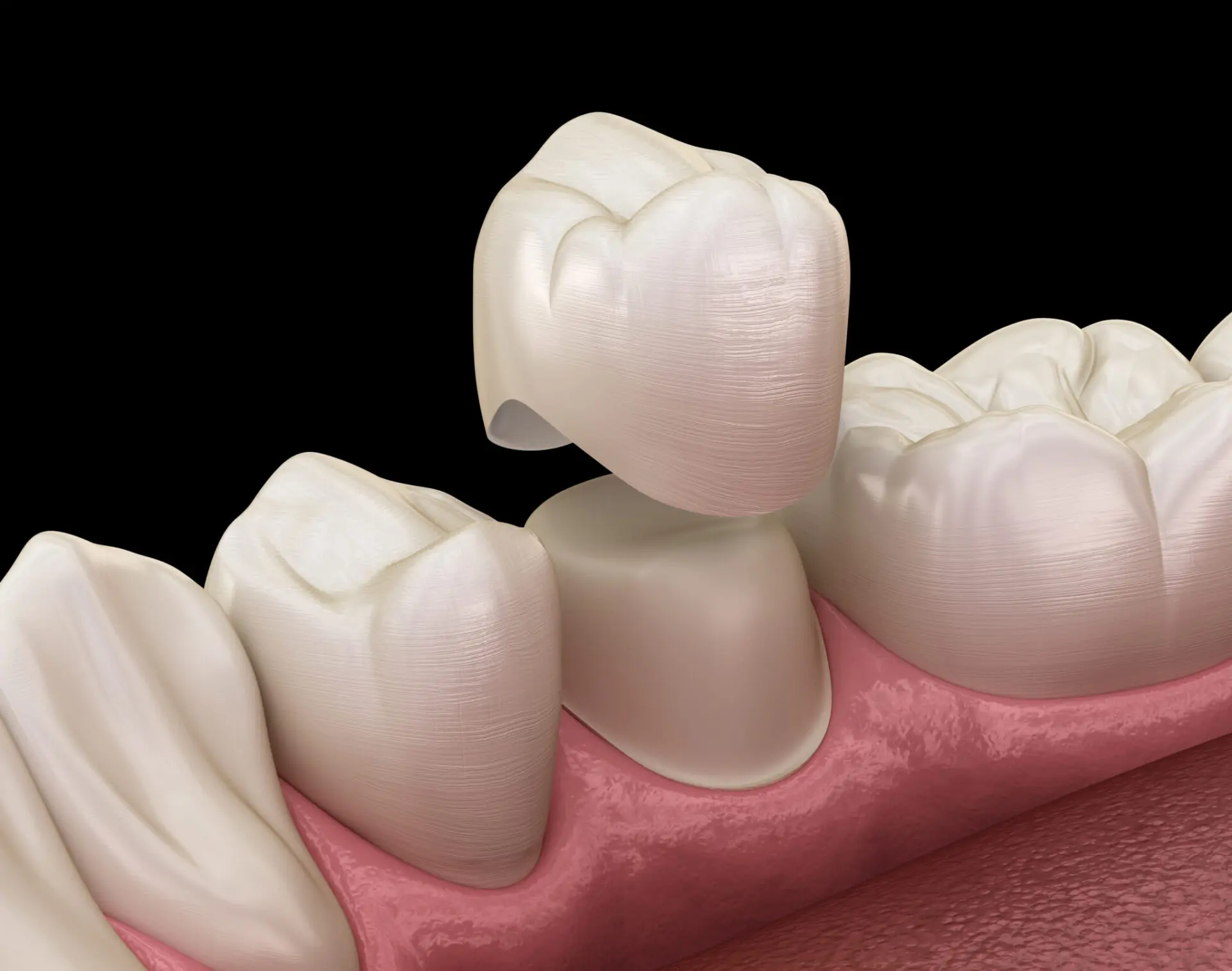
Same-day crowns are sold as a win-win: you save a visit, and your dentist delivers a crown in a single appointment. It sounds like modern dentistry at its best.
But here’s what most patients aren’t told, CEREC crowns are frequently not the best restoration for your tooth. They’re a compromise. A compromise on strength, a compromise on how long the crown will last, often a compromise on how it looks, and in many offices, a compromise driven more by convenience and the practice’s finances than by what’s genuinely right for you. Before you agree to one, here’s what you should understand.
The material is the real issue
Most CEREC same-day crowns are made from a ceramic called lithium disilicate, you may hear it called “e.max.” It’s a middle-of-the-road material. It’s not the strongest option, it’s not the most durable, and it’s not the most natural-looking. It’s simply the material that fits the same-day workflow.
Here’s how the three main crown materials actually stack up:
- CEREC ceramic (e.max): The weakest of the three. Prone to cracking and chipping, especially on back teeth and in people who grind or clench.
- Lab-made zirconia: Roughly 2 to 3 times stronger than e.max. Extremely resistant to cracking. Modern versions also look exceptionally esthetic.
- Gold: Practically unbreakable. Wears at the same rate as your natural teeth, and requires less drilling, so more of your real tooth is preserved.
If you have a strong bite, grind your teeth, or need a crown on a back molar that handles serious chewing force every day, putting e.max on that tooth is asking for trouble. It’s the wrong material for the job. Zirconia or gold would hold up significantly better, and your dentist almost certainly knows this.
They don’t last as long
Yes, CEREC crowns have reasonable survival numbers on paper, but those numbers mask an important detail: when CEREC crowns fail, it’s usually because the ceramic has cracked. That’s not a random event. It’s a predictable consequence of putting a mid-strength ceramic on a high-force tooth.
Gold and zirconia crowns fail far less often in the same situations. A 5-year study comparing gold to zirconia found they both outperform what you’d expect from lithium disilicate on a heavily used tooth. If you want a crown that lasts 20+ years rather than one you might need to replace in 10, starting with a better material is the single most important decision.
They often don’t look as good
This part frustrates a lot of patients after the fact: CEREC crowns are carved from a solid, pre-colored block of ceramic. That’s it. There’s no artistry, no layering, no hand-customization.
A lab-made crown is finished by a trained ceramist, someone who hand-layers porcelain, adjusts how light passes through it, and blends the color to your surrounding teeth. Studies comparing the two have consistently rated lab crowns as more natural-looking.
For a back tooth, a basic CEREC crown mau look fine. For a front tooth, a premolar that shows when you smile, or any situation where matching neighboring teeth matters, a CEREC crown often looks flatter, more uniform, and obviously artificial compared to what a lab can produce. If you’ve ever seen a crown that looks “off” next to someone’s natural teeth, there’s a decent chance it was a same-day crown.
Understanding the business side of same-day crowns
It’s worth understanding how the economics of same-day crowns differ from traditional ones, because it can quietly shape the options you’re offered.
A traditional crown involves a dental lab. The dentist sends a scan or impression to the lab, a technician makes your crown, and the lab charges the dentist a fee, typically $200 to $400 or more, depending on the material.
With a CEREC machine, the lab step is handled in-house, and that fee stays with the practice.
CEREC machines also represent a significant investment, often well over $200,000, so once a practice has one, there’s a natural interest in using it regularly. That’s not unusual in any business, but it’s worth being aware of, because it can gently influence which option a patient hears about first.
The vast majority of dentists using CEREC use it thoughtfully and in situations where they believe it’s a good fit. Still, when a same-day crown is recommended, it’s reasonable for patients to know that convenience and practice workflow can be part of the picture alongside the clinical reasoning, and to feel comfortable asking whether a lab-made crown might be a better choice for their specific tooth.
When CEREC is acceptable (and when it isn’t)
To be fair, CEREC is a reasonable choice in a narrow set of situations:
- A small-to-moderate crown on a first molar or premolar in someone with a normal bite
- Someone who truly cannot return for a second visit
- An emergency where a tooth needs to be covered quickly
Outside of those cases, you should think twice. Be especially cautious if:
- The tooth is a second molar (the very back tooth), CEREC’s weak point is exactly the kind of force these teeth take
- You grind or clench your teeth, even occasionally
- You’ve had a crown or large filling crack before
- The tooth shows when you smile
- You want the crown to last as long as possible
In these situations, a lab-made zirconia or gold crown is genuinely the better choice, and accepting a CEREC crown means accepting a restoration that’s more likely to fail, look worse, or both.
Questions to ask before agreeing to a same-day crown
If your dentist recommends CEREC, it’s completely reasonable to push back and ask:
- What material are you using, and why is it the best choice for this specific tooth?
- Would zirconia or gold from a lab actually last longer on this tooth?
- How often do you see CEREC crowns crack or need replacement on back teeth?
- Why aren’t we using a stronger material?
- Does the price change if we go with a lab-made crown?
If the answers feel rushed, dismissive, or heavily focused on the convenience of a single visit rather than the clinical reasoning, that’s a signal worth paying attention to. A dentist whose first priority is your tooth will give you a thoughtful answer. A dentist whose first priority is their schedule or their CEREC machine will steer the conversation back to “you’ll save a trip.”
The bottom line
Same-day CEREC crowns are convenient. They are not, in most cases, the best crown for your tooth. The material is weaker. The longevity is shorter. The appearance is often inferior.
Lab-made zirconia is stronger and more durable. Gold is even tougher and preserves more of your natural tooth. Lab-made crowns are more aesthetic when appearance matters. For most crowns on most teeth, taking the extra visit to get a lab-made restoration is the better decision — often by a significant margin.
Before you say yes to same-day convenience, make sure you actually understand what you’re trading away. In most cases, it’s more than people realize.