Oral Sleep Apnea Appliance vs CPAP: What Guelph Patients Need to Know
If you have recently been diagnosed with obstructive sleep apnea, your doctor has likely mentioned CPAP therapy and you may have some mixed feelings about it. A mask, a machine, a hose, and the noise that comes with it are not exactly an appealing prospect for most people. The good news is that for many patients, there is an alternative worth serious consideration. At Scottsdale Dental Centre in Guelph, we offer custom oral appliance therapy as a clinically supported option for treating obstructive sleep apnea. This post breaks down how the two treatments compare so you can have a more informed conversation with your healthcare team.
Understanding the Problem Both Treatments Are Solving
Before comparing the two options, it helps to understand what they are both trying to achieve. Obstructive sleep apnea occurs when the soft tissues at the back of the throat collapse during sleep and block the airway. This results in repeated breathing interruptions that fragment sleep, reduce oxygen levels in the blood, and place significant strain on the cardiovascular system over time. Both CPAP and oral appliance therapy are designed to keep the airway open during sleep, they simply go about it in very different ways.
How CPAP Works
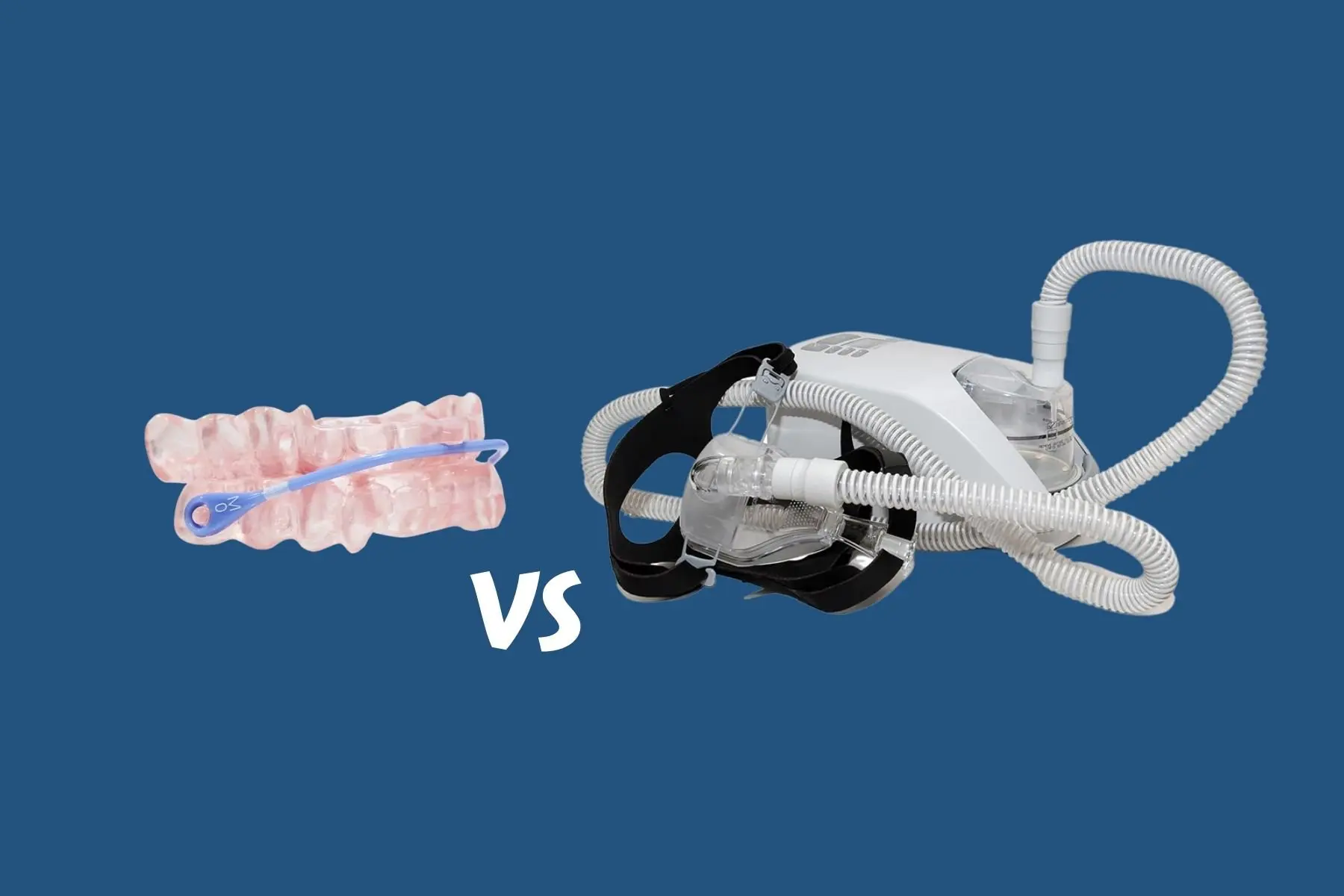
CPAP stands for Continuous Positive Airway Pressure. The machine delivers a steady stream of pressurized air through a mask worn over the nose, mouth, or both. This constant air pressure acts as a pneumatic splint, physically holding the airway open throughout the night. CPAP is highly effective when used correctly and consistently. For patients with severe obstructive sleep apnea or those who also have central sleep apnea, it remains the gold standard treatment. It works regardless of the position you sleep in and can be precisely calibrated to the exact pressure your airway requires.
How an Oral Appliance Works
A custom oral sleep apnea appliance, known as a mandibular advancement device, takes a mechanical rather than pneumatic approach. The device fits over both the upper and lower teeth and gently holds the lower jaw in a slightly forward position during sleep. This forward repositioning tightens the soft tissues at the back of the throat and prevents them from collapsing into the airway. The appliance is silent, requires no power source, and fits in a small carry case. It looks similar in size and concept to a sports mouthguard, though it is far more precisely engineered and custom-fitted to your specific anatomy.
Comparing the Two: Key Differences
Comfort and wearability are where oral appliances tend to have a clear advantage. Many patients find CPAP masks uncomfortable, claustrophobic, or difficult to sleep with, particularly those who move around during sleep, sleep on their side, or share a bed with a partner who is disturbed by the noise or equipment. Oral appliances require an adjustment period of their own, but most patients find them significantly easier to tolerate night after night.
Effectiveness is an area where CPAP has traditionally held the edge, particularly for severe sleep apnea. CPAP directly controls airway pressure and can be titrated with great precision. Oral appliances are highly effective for mild to moderate obstructive sleep apnea, and studies have shown that their real-world effectiveness often rivals CPAP in this population, largely because patients who find CPAP intolerable end up not using it at all. A treatment that is used consistently is far more effective than one that sits on the nightstand.
Compliance is one of the most important factors in sleep apnea treatment outcomes, and it is where oral appliances consistently outperform CPAP in research. Studies have shown that patients use their oral appliances for more hours per night and more nights per week than CPAP devices, even when CPAP produces slightly better results in ideal conditions. For many patients, the simplicity and comfort of the appliance translates directly into better long-term adherence.
Portability and convenience strongly favour oral appliances. Travelling with a CPAP machine requires carrying the device, its power supply, distilled water for the humidifier, and compatible adapters for international travel. An oral appliance fits in a jacket pocket and works anywhere in the world without any additional equipment or power source.
Noise is a non-issue with oral appliances. CPAP machines have become quieter over the years, but they still produce sound and some patients, or their partners, find this disruptive. An oral appliance is completely silent.
Maintenance for CPAP involves regular cleaning of the mask, tubing, and humidifier chamber, as well as periodic replacement of components. Oral appliances require daily rinsing and brushing, which most patients find quick and straightforward. Both require some level of ongoing care to remain hygienic and functional.
Cost varies depending on insurance coverage and the specific devices involved. CPAP machines require ongoing supply purchases, including masks, filters, tubing, and humidifier parts that are replaced on a schedule. Custom oral appliances involve a higher upfront investment but have fewer ongoing costs once the device is in place. Many dental insurance plans now provide some coverage for oral appliance therapy for sleep apnea, and we can help you navigate what your plan includes.
Who Is the Best Candidate for Each Treatment?
CPAP is typically the first-line recommendation for patients with severe obstructive sleep apnea, those with central or complex sleep apnea, and patients who tolerate the equipment well. It is also the preferred option when other medical conditions make precise airway pressure management important.
Oral appliance therapy tends to be the better fit for patients with mild to moderate obstructive sleep apnea, those who have tried CPAP and found it intolerable, people who travel frequently, patients who find masks claustrophobic or uncomfortable, those who sleep on their side or stomach, and anyone who wants a simpler, quieter solution that does not require power or equipment.
It is worth noting that the two approaches are not mutually exclusive. Some patients use CPAP as their primary treatment at home and keep an oral appliance for travel. Others transition from CPAP to an oral appliance after struggling with long-term compliance. Your sleep physician and dental team can work together to find the right combination for your situation.
What About Over-the-Counter Anti-Snoring Devices?
Pharmacies and online retailers sell a variety of generic anti-snoring mouthpieces that work on a similar principle to custom oral appliances. These devices are generally made from a soft thermoplastic material that you mould yourself at home using a boil-and-bite method. While they are inexpensive and accessible, they have significant limitations. Generic devices cannot be precisely adjusted to the degree of advancement your airway requires, they do not fit as accurately or comfortably as a custom appliance, and they are not a medically appropriate substitute for treating diagnosed sleep apnea. If you have confirmed obstructive sleep apnea, a custom appliance fabricated through a dental office and overseen by your healthcare team is the appropriate option.
The Role of Your Dentist in Sleep Apnea Treatment
Many patients are surprised to learn that their dentist can be an important part of their sleep apnea care team. Dentists trained in dental sleep medicine are uniquely positioned to assess oral anatomy, take the precise impressions and bite records needed for a custom appliance, manage the fitting and titration process, and monitor for any effects on the teeth, jaw, or bite over time. At Scottsdale Dental Centre, we work collaboratively with sleep physicians and other healthcare providers to ensure our patients receive coordinated, appropriate care. If you do not yet have a sleep apnea diagnosis but are experiencing symptoms, we can point you in the right direction to get assessed before exploring treatment options.
Making the Right Choice for Your Sleep and Your Health
There is no single answer that is right for every patient. The best treatment for sleep apnea is the one that is effective for your level of severity, comfortable enough that you will actually use it every night, and sustainable over the long term. For many patients in Guelph, a custom oral appliance offers the right combination of effectiveness, comfort, and simplicity to make a genuine and lasting difference in their sleep quality and overall health.
Book Your Sleep Apnea Consultation in Guelph
If you have been diagnosed with sleep apnea and are struggling with CPAP, or if you suspect you may have sleep apnea and want to understand your options, we would love to help. Contact Scottsdale Dental Centre today to book your consultation and find out whether oral appliance therapy is the right fit for you.